

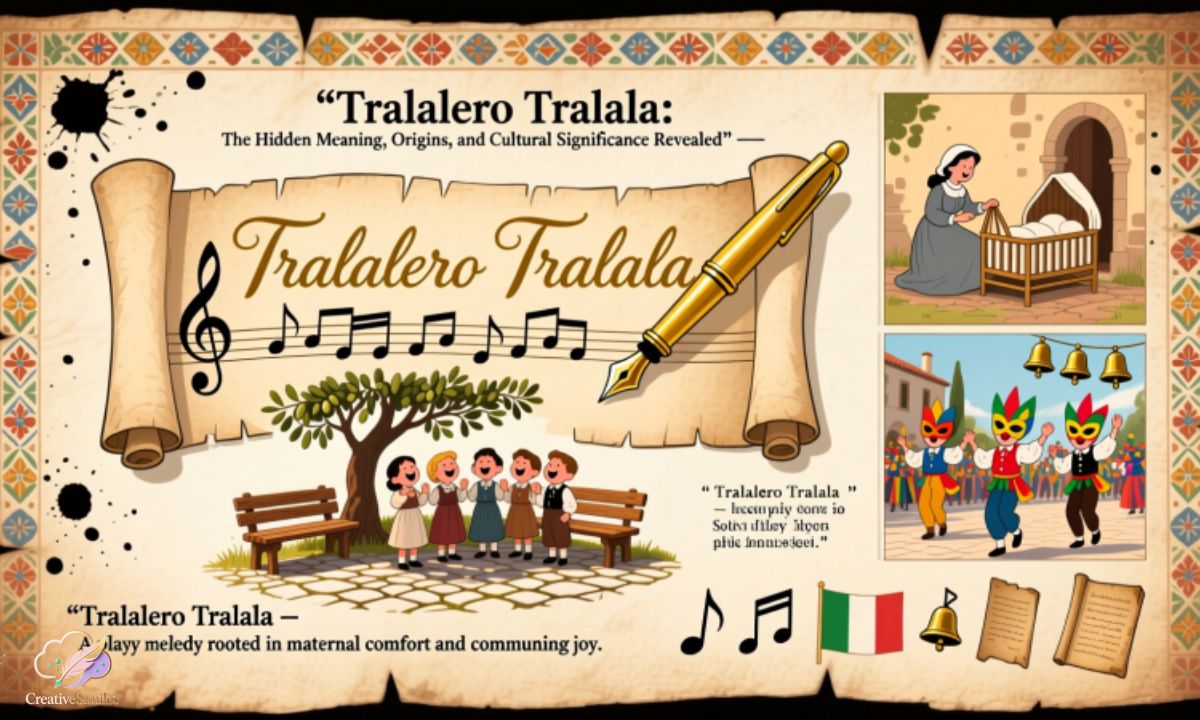
Ever wondered what “Tralalero Tralala” really means when you hear it in songs or TikTok memes? It’s not a secret code or magical phrase it’s a playful mix of musical sounds that’s been bringing joy for centuries!
Originating from Genoa, Italy, “Tralalero” is a traditional folk singing style, while “Tralala” is the universal “la-la-la” filler you hear everywhere. Together, they celebrate music, culture, and fun no translation needed!
What Does “Tralalero Tralala” Mean?
So, what does tralalero tralala mean in simple terms? “Tralalero” is a traditional Genoese choir tradition where singers use their voices to mimic instruments through polyphonic folk songs. “Tralala” is those cheerful, wordless sounds we all hum like musical nonsense syllables that need no translation.
Together, what does tralalero tralala mean represents pure vocal expression. It’s music that speaks through sound alone, blending Italian folk music heritage with universal joy.
Whether in Mediterranean folk singing or viral TikTok Italian memes, these syllables carry emotion beyond words.
The Linguistic Roots of “Tralala” and “Tralalero”
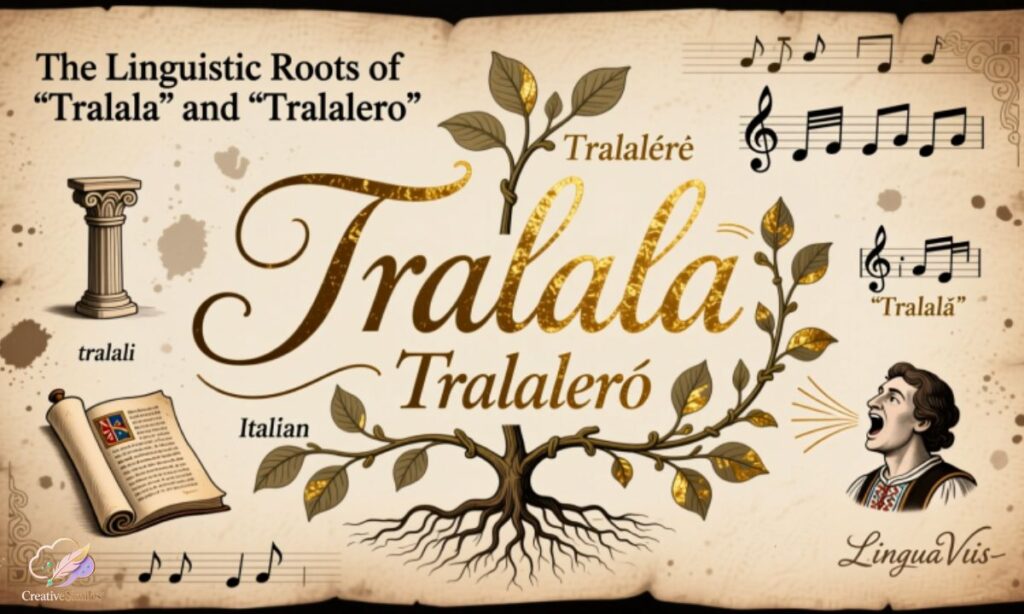
Ever wondered where these playful sounds actually come from? Understanding what does tralalero tralala mean starts with their linguistic origins.
“Tralala” appears across Western songs as a filler sound, while “tralalero” is deeply rooted in the singing traditions of Liguria, specifically Genoa’s working-class neighborhoods.
These aren’t just random syllables they’re examples of sound symbolism in music. When people ask what does tralalero tralala mean, they’re really asking about onomatopoeic music sounds that have evolved over centuries. Here’s what you need to know about their roots:
- Tralalero comes from Genoese dialect, referring to the Trallalero singing style where voices imitate guitars, mandolins, and other instruments
- Tralala derives from common European vocal sounds used in folk music, nursery rhymes, and opera to represent carefree singing
- Both use musical nonsense syllables that prioritize rhythm and melody over literal meaning
- The tralalero pronunciation mimics instrumental sounds through Italian vocal harmonies and polyphonic techniques
- Together they represent musical expression without words, showing how sound itself can carry cultural identity and emotion
Trallalero: The Traditional Genoese Singing Style
To truly understand what does tralalero tralala mean, you need to know about Trallalero a unique form of Italian folk music from Genoa where voices imitate instruments.
This isn’t just singing; it’s tralalero polyphony where five singers create an entire band using only their voices, no instruments needed.
- Originated in Genoa’s working-class neighborhoods among dockworkers during the 19th century
- Features Italian vocal harmonies with five distinct tralalero musical roles imitating guitars, bass, and strings
- Recognized as Italian musical heritage and part of Mediterranean folk singing traditions
- Performed a cappella in taverns, making it central to Genoa cultural identity
- Still alive today at Italian folk festivals and tralalero choir performances
- Represents musical expression without words through pure vocal imitation
| Voice Role | Function | Sound It Imitates |
| Tenor | Main melody | Lead vocal line |
| Chitarra | Rhythm | Guitar strumming |
| Contrà | Counter-melody | Mandolin |
| Basso | Foundation | Double bass |
| Falsetto | High harmonies | Violin |
Why “Tralala” Shows Up in Songs Everywhere
When asking what does tralalero tralala mean, the “tralala” part is actually everywhere in music history. These musical nonsense syllables appear across cultures because they’re universal they let us sing along even without knowing the words, creating those catchy la-la-la songs we all love.
Tralala Song Examples:
- Children’s songs and nursery rhymes :use “tralala” for easy, memorable melodies kids can sing
- Classical tralala in opera: incorporates these syllables in joyful arias and vocal performances
- Pop and folk fusion: tracks feature “tralala” as hooks in countless Western songs with catchy choruses
- Viral TikTok sounds :bring tralala back as shareable musical moments in Italian meme culture
“Tralalero Tralala” in Modern Meme and TikTok Culture
So what does tralalero tralala mean to Gen Z and internet users today? It’s gone from traditional Italian folk music to a full-blown viral sensation, showing up in TikTok Italian memes and becoming part of the Italian brainrot meme phenomenon that’s taking over social media feeds worldwide.
Platform Examples:
- TikTok viral sounds: featuring tralalero clips rack up millions of views as users remix traditional Genoese choir performances with modern beats
- Italian internet culture :embraced it as the tralalero TikTok trend, where creators humorously exaggerate the dramatic vocal styles
- Meme accounts use snippets asking “what does tralalero tralala mean” as a setup for comedy sketches about confusing cultural things
- YouTube compilations of tralalero choir performances go viral, introducing Italian traditional music online to new global audiences
- Instagram Reels blend the sounds with everything from cooking videos to travel content, making Italian musical heritage cool again
Common Misunderstandings: Religion, Language, and Symbolism
Many people searching what does tralalero tralala mean stumble into some wild misconceptions some think it’s a religious chant, others believe it’s Italian slang with hidden meanings. The truth is simpler: it’s just musical expression, not a secret code or sacred ritual.
Let’s clear up what what does tralalero tralala mean actually doesn’t mean, because the internet loves creating myths:
Myths Clarified:
- It’s NOT a religious or spiritual phrase:tralalero is secular Italian folk music from taverns, not churches or ceremonies
- It’s NOT actual Italian words with literal translation:these are onomatopoeic music sounds and musical nonsense syllables meant to mimic instruments, not communicate messages
- It’s NOT just random gibberish:when people ask what does tralalero tralala mean, the answer is it represents structured vocal imitation and sound symbolism in music with cultural significance rooted in Genoa’s working-class heritage
How “Tralalero Tralala” Translates Across Languages
Here’s something fascinating about what does tralalero tralala mean—it doesn’t really translate at all, and that’s the whole point. These musical nonsense syllables transcend language because they’re pure sound, understood everywhere through rhythm and emotion.
| Language/Culture | Musical Syllables | Context | Similar to Tralalero? |
| Italian (Genoa) | Tralalero, tralala | Genoese choir tradition | Original tradition |
| English | La-la-la, tra-la-la | Pop songs, nursery rhymes | Very similar |
| French | Lalala, tra-la-la | Chansons, folk music | Nearly identical |
| Spanish | Larala, tralará | Folk and festive songs | Same pattern |
| German | Trallala, lala | Folk and opera | Direct equivalent |
| Japanese | Lalala (ラララ) | Pop and anime songs | Modern adaptation |
Tralalero vs. Tralala: Spot the Difference
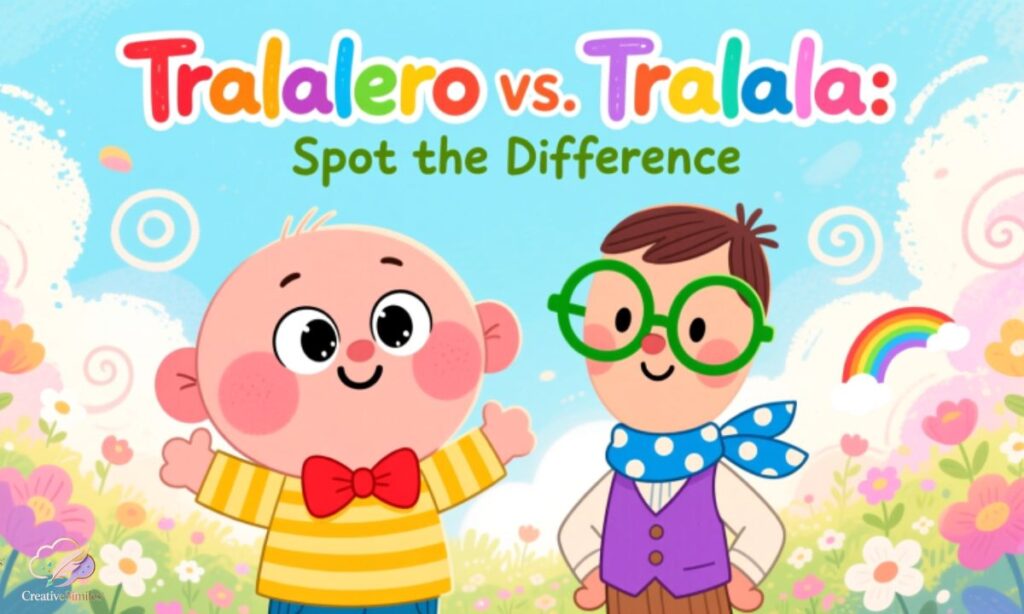
People often wonder what does tralalero tralala mean when used separately are they the same thing? Not quite. While both involve musical expression without words, tralalero is a specific Italian cultural tradition with structured roles, while tralala is a universal musical sound found everywhere.
| Aspect | Tralalero | Tralala |
| Origin | Genoa, Italy (19th century) | Universal across cultures |
| Style | Structured Trallalero singing style with five vocal roles | Free-form musical nonsense syllables |
| Complexity | Complex tralalero polyphony imitating instruments | Simple, repetitive la-la-la patterns |
| Context | Italian folk music, Genoese choir tradition | Children’s songs, pop music, casual humming |
| Cultural Ties | Deeply rooted in Genoa cultural identity | Universal sound symbolism in music |
| Performance | Formal tralalero choir performance | Spontaneous, informal singing |
| Meaning | What does tralalero mean: vocal instrument imitation | What does tralala mean: joyful wordless singing |
How to Pronounce “Tralalero” and “Tralala”
Want to know what does tralalero tralala mean AND say it correctly? The tralalero pronunciation is distinctly Italian you roll the R’s and keep the vowels open and clear, just like you’d hear in authentic Italian vocal harmonies from Genoa.
| Term | Phonetic Breakdown | How to Say It | Key Tip |
| Tralalero | trah-lah-LEH-roh | “Trah” + “lah” + “LEH” (stress) + “roh” | Roll the R, stress third syllable |
| Tralala | trah-lah-LAH | “Trah” + “lah” + “LAH” | Light, singsongy—like la-la-la songs |
| Combined | trah-lah-LEH-roh trah-lah-LAH | Flow them together rhythmically | Keep it melodic like Mediterranean folk singing |
Real-World Examples of “Tralalero Tralala”
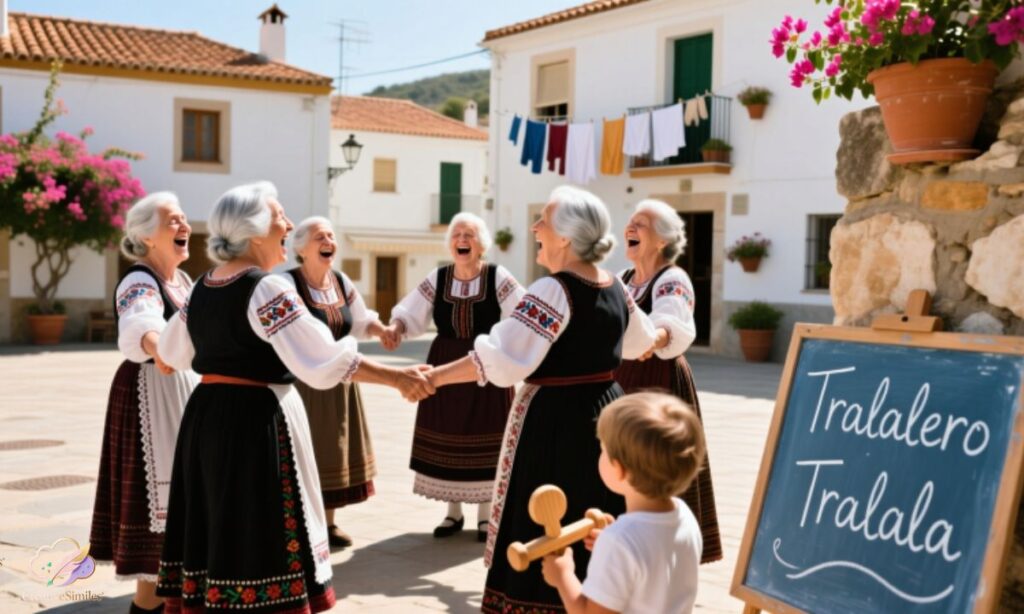
Wondering where you’ll actually encounter what does tralalero tralala mean in real life? These sounds show up in surprising places from traditional Italian folk festivals to your favorite viral TikTok sounds, proving how timeless musical expression without words really is.
- Traditional tralalero choir performances at Genoa’s annual folk festivals, where groups like “Trallalero di Genova” keep the Genoese choir tradition alive with authentic polyphonic folk songs
- Viral TikTok Italian memes featuring clips of dramatic tralalero singing styles, often used humorously to represent Italian internet culture and the Italian brainrot meme trend
- Children’s music and tralala nursery rhymes worldwide that use these onomatopoeic music sounds from “Skip to My Lou” to Italian lullabies that naturally incorporate la-la-la patterns and tralala rhythm patterns
Cultural Meaning and Symbolism
Beyond the technical definition, what does tralalero tralala mean on a deeper cultural level? It represents joy, unity, and tradition the power of voices coming together to create something beautiful and preserve Genoa cultural identity through generations.
Cultural Symbolism:
- Joy and celebration:these musical nonsense syllables capture pure happiness, which is why tralala shows up in festive songs and Italian folk festivals
- Unity and collaboration:the Trallalero singing style needs five voices in perfect tralalero polyphony, showing how people create harmony together
- Tradition and preservation:keeping this Italian musical heritage alive honors the singing traditions of Liguria and Mediterranean folk singing roots
Interesting Facts About Trallalero and Tralala
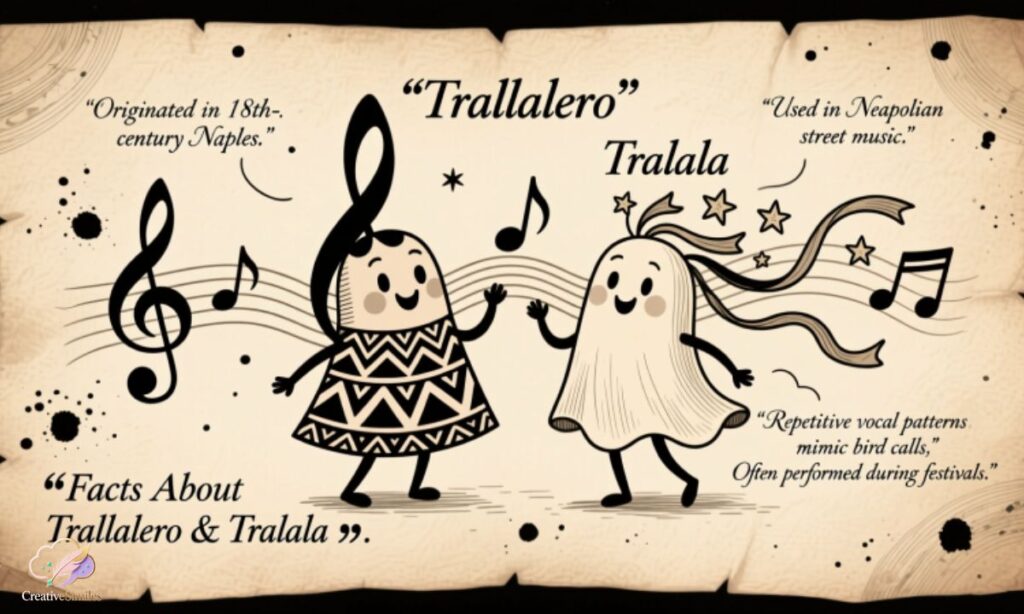
Fun Facts:
- Tralalero was born in taverns:this Genoese choir tradition started among dockworkers drinking wine, who’d spontaneously create Italian vocal harmonies without any instruments, making it true working-class art
- No written music allowed:traditional tralalero is passed down orally through generations, meaning every tralalero choir performance relies on memory and ear training, not sheet music
- The “chitarra” singer mimics guitar so well :people often can’t believe there’s no actual instrument that’s the magic of vocal imitation in this polyphonic folk singing style
- “Tralala” appears in opera classics:famous composers used these musical nonsense syllables in arias, proving that understanding what does tralalero tralala mean connects folk music to high art
- UNESCO is watching:tralalero is being considered for intangible heritage status, recognizing its importance to Italian traditional music online and Genoa’s cultural preservation efforts
- Modern tralalero groups exist worldwide :from Italy to Argentina, immigrant communities keep this Italian folk music alive, and now the tralalero TikTok trend is introducing it to millions who ask what does tralalero tralala mean
Why People Love “Tralalero Tralala” Today
So why is everyone suddenly curious about what does tralalero tralala mean in 2024? It’s the perfect blend of nostalgia and novelty traditional Italian folk music meets viral internet culture in a way that feels both authentic and wildly entertaining.
Modern Appeal:
- Instantly shareable sounds:the dramatic Italian vocal harmonies make perfect TikTok viral sounds, creating the tralalero TikTok trend that’s captivating millions searching what does tralalero tralala mean
- Universal emotion:you don’t need translation; these onomatopoeic music sounds communicate pure joy across all languages, proving musical expression without words still resonates today
- Authentic yet meme-able:it satisfies cravings for real Italian musical heritage while being funny enough for Italian meme culture, showing tralalero modern relevance in the digital age
Final Words
“Tralalero Tralala” may sound silly, but it carries a rich musical story behind it. It reminds us that music doesn’t always need words to express joy and emotion.
From old Italian folk songs to modern memes, this phrase connects generations through sound. Its charm lies in being simple, playful, and universally understood.
Frequently Asked Questions
What Does Tralalero Tralala Mean in Simple Words?
It doesn’t have a literal meaning it’s a fun, musical phrase made from sounds like “la-la-la” used to express joy and rhythm.
What Does Tralalero Tralala Mean on TikTok and Memes?
Online, it’s used for humor and “Italian vibes,” often in playful videos and trending meme sounds.
What Does Tralalero Tralala Mean in Italian Culture?
It connects to Trallalero, a traditional Genoese folk singing style that uses vocal sounds instead of instruments.
Is Tralalero Tralala a Real Italian Word or Just Nonsense?
It’s a mix of real cultural roots and nonsense syllables meaningful in music, not in translation.
Why Do People Say Tralalero Tralala in Songs?
Singers use it to fill melodies, keep rhythm, and add a cheerful, catchy feel to music.
Does Tralalero Tralala Have Any Religious or Spiritual Meaning?
No, it’s not religious at all it’s purely musical and cultural, with no spiritual symbolism.
Why Is Everyone Searching What Does Tralalero Tralala Mean Today?
Because memes and short videos made the phrase go viral, sparking curiosity about its origin and meaning.

Lucas Gray ICI, with 4 years of experience, is a creative writer specializing in articles. Skilled in fun, similes, meaning, and metaphors, he makes every piece engaging, memorable, and full of creative flair at CreativeSimiles.com.