

Ever wondered what “Habibi” really means when you hear it in songs or movies? This fun guide dives into the Arabic word that’s more than just “my love” – it’s a warm hug in words!
From calling your best friend to sweetly addressing your partner, Habibi is everywhere in Arabic culture. Learn its twists, turns, and playful uses that make it a global term of affection!
Habibi Meaning in Arabic
The habibi meaning in Arabic translates to “my beloved” or “my dear” in English. It comes from the Arabic root “hubb,” which means love. When someone calls you habibi, they’re showing affection and warmth. It’s one of the most popular Arabic terms of affection used across the Middle East.
The habibi Arabic meaning has gender forms. Habibi is for males, while Habibti is for females. The difference between habibi vs habibti is just grammatical gender ❤️. Arabs use these words daily with family, friends, and romantic partners.
Key Points About Habibi:
Habibi = Used for males (my beloved/my dear)✅
Habibti = Used for females (same meaning, different gender)✅
Cultural Context = Used casually among friends, family, and romantic partners in Arabic-speaking communities✅
Habibi Meaning in English
The habibi meaning in English doesn’t have one exact translation. It depends on context and relationship. Generally, habibi translates to “my love,” “my dear,” or “my darling.” Sometimes it’s casual like “buddy” or “friend.” The habibi translation captures affection, whether romantic or platonic 💕.
Common English Translations:
My Love :Used between romantic partners or very close family members💕
My Dear :A warm, affectionate way to address friends and family💕
Buddy/Friend :Casual usage among friends, especially male friends💕
| Arabic Term | Literal Meaning | English Equivalent |
| Habibi (to male) | My beloved | My love, my dear, buddy |
| Habibti (to female) | My beloved | My love, my dear, darling |
| Ya Habibi | Oh my dear | Oh my love, dear friend |
Variations and Phrases with Habibi
The habibi meaning extends beyond the single word. Arabs combine habibi with other expressions to create common phrases used daily. These variations add different flavors to the basic term of endearment.
Understanding ya habibi meaning, wallah habibi meaning, and other combinations helps you grasp how flexible this affectionate word truly is 😄.
Popular Habibi Phrases:
Ya Habibi :Means “Oh my dear” or “Oh my love.” Often used in songs and emotional conversations to emphasize affection.🎵
Yalla Habibi :Translates to “Let’s go, my dear” or “Come on, buddy.” The yalla habibi meaning is friendly encouragement or urgency.😄
Wallah Habibi :Means “I swear, my dear” or “Really, my friend.” The wallah habibi meaning combines sincerity with affection.💯
Shukran Habibi :Translates to “Thank you, my dear.” The shukran habibi meaning is a warm, grateful expression among friends.🙏
Hamood Habibi :A viral meme phrase from an Arabic song. The hamood habibi meme became popular on social media for its catchy tune and playful vibe.🎶
Habibi Meaning in Different Languages & Cultures
The habibi meaning has crossed borders and languages over time. While it’s originally Arabic, the word is now recognized in many cultures worldwide 🌍. In South Asia, habibi in Urdu is understood and used similarly to express affection.
Bollywood movies have popularized habibi in Bollywood through romantic songs and scenes. The global meaning shows how one word connects different cultures through love and friendship.
Habibi Meaning in Hindi & Urdu
The habibi meaning has been adopted into Hindi and Urdu, especially in regions with Islamic cultural influence. While Hindi and Urdu have their own terms of endearment, habibi in Urdu is widely understood and used among Muslim communities 🕌.
Habibi in Hindi & Urdu:
Hindi Translation :प्रिय (priya) means “dear” or “beloved,” which captures the habibi love meaning🕌
Urdu Translation :میرے عزیز (mere aziz) means “my dear” or “my beloved”🕌
| Language | Term | Pronunciation | English Meaning |
| Arabic | حبيبي (Habibi) | ha-bee-bee | My beloved/my dear |
| Hindi | प्रिय (Priya) | pri-ya | Dear/beloved |
| Urdu | میرے عزیز (Mere Aziz) | me-ray a-zeez | My dear/my beloved |
| English | My Love/Dear | – | Term of endearment |
Habibi in Islamic Context
The habibi meaning in Islamic culture goes beyond everyday affection. While habibi is a cultural Arabic term, it also appears in religious contexts ✨. Muslims use the word respectfully when discussing prophets and beloved figures in Islamic history.
Islamic & Cultural Usage:
Cultural vs Religious Use :Habibi in Islamic culture is mainly cultural for daily affection, but “Habib Allah” (beloved of God) refers to Prophet Muhammad with deep reverence✨
Habib Allah Reference :This special phrase means “the beloved of Allah” and shows the highest level of honor and love in Islamic tradition✨
Habibi in Slang
The habibi meaning has evolved into modern slang, especially among young people and internet culture. Habibi slang is now used playfully in memes, TikTok videos, and casual conversations worldwide 😎.
It’s no longer just an Arabic term it’s become a global expression of friendship and coolness.
Habibi in Modern Slang:
Youth & Social Media Use :Habibi in social media and habibi in memes are trending, with people using it casually even without Arabic backgrounds🎤
Pop Culture Adoption :Habibi in pop culture, especially habibi in rap songs, has made it a universal term for “bro” or “buddy” among Gen Z😎
Habibi to a Girl vs. to a Boy
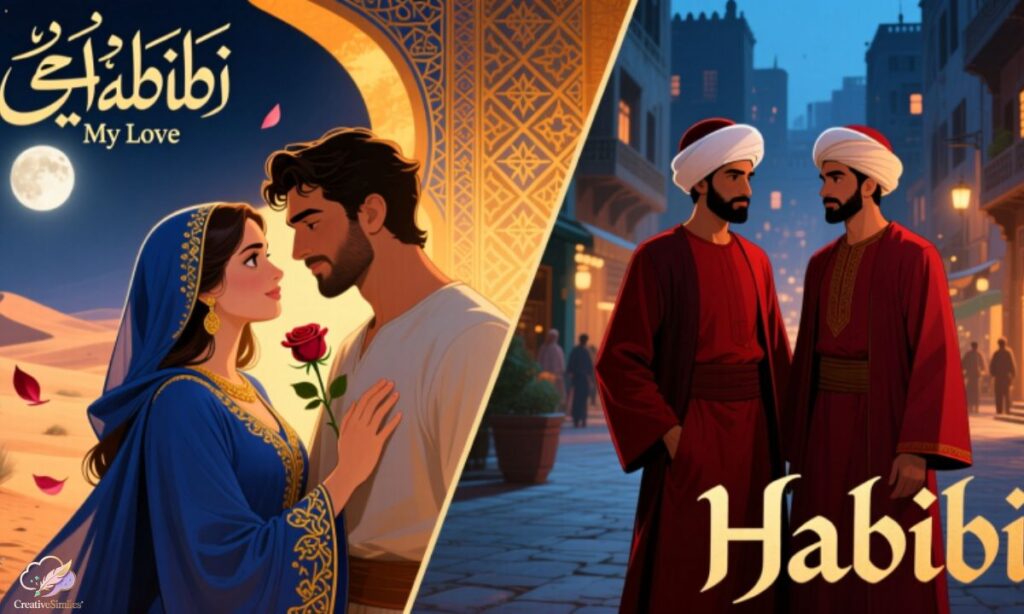
The habibi meaning changes based on gender in Arabic grammar. When addressing habibi to a boy, you say “habibi,” but when saying habibi to a girl, you must use “habibti” 👦👧. This distinction is important in Arabic because the language requires gender agreement in words.
Gender-Specific Usage:
Habibi (حبيبي) :Used when speaking to males; means “my beloved” or “my dear” for boys and men👦
Habibti (حبيبتي) :Used when speaking to females; the habibti meaning is identical but grammatically feminine👧
| Term | Gender | Usage | Example |
| Habibi | Male 👦 | For boys/men | “Come here, habibi” |
| Habibti | Female 👧 | For girls/women | “How are you, habibti?” |
| Ya Habibi | Male | Emphasis for males | “Ya habibi, I missed you” |
| Ya Habibti | Female | Emphasis for females | “Ya habibti, thank you” |
Habibi in Popular Culture
The habibi meaning has exploded in global pop culture over recent years. You’ll find habibi in songs from artists worldwide, from Arabic pop to Western rap 🎶. The word adds an exotic, affectionate touch that resonates with audiences everywhere, making it a favorite in the music industry.
Beyond music, habibi appears everywhere in entertainment and digital spaces. Habibi in movies and habibi in TV shows often feature the term in romantic or comedic scenes 🎬.
Social media has amplified its reach even further, with habibi in memes becoming viral content that transcends language barriers 📱.
Habibi in Pop Culture:
Music & Songs :Habibi in music is huge, from Arabic love songs to habibi in rap songs by international artists using it for style and cultural flair🎶
Movies & TV :Habibi in movies and TV shows portrays Middle Eastern characters or romantic moments, making the term recognizable globally🎬
Social Media & Memes :The hamood habibi meme went viral, and habibi in social media is now used playfully in TikToks, tweets, and Instagram posts📱
Common Misconceptions About Habibi
Many people misunderstand the habibi meaning and its usage in different contexts. While it’s a beautiful Arabic term of endearment, several myths surround how and when it should be used 🤔. Clarifying these misconceptions helps you use habibi appropriately and appreciate its cultural significance.
Common Myths About Habibi:
Not Always Romantic :The habibi love meaning exists, but habibi for friends is equally common; it’s used casually among buddies, not just romantic partners❌
Not Exclusive to Arabs :While habibi origin is Arabic, non-Arabs worldwide use it thanks to habibi in pop culture and social media❌
Not Professional :Habibi is an affectionate word best saved for personal relationships; using it in formal business settings isn’t appropriate❌
Not Only Muslim :Habibi in Arabic culture is used by Christians, Muslims, and people of all religions across the Middle East❌
Expert Insights on Habibi
Language experts emphasize that the habibi meaning represents more than just a word—it’s a window into Arab hospitality and warmth 📝. Dr. Mahmoud Al-Batal, an Arabic language professor, notes that habibi usage in daily life reflects how Arabs express affection openly to strengthen social bonds.
Cultural anthropologists point out that habibi in Arabic culture functions as social glue 👨🏫. The flexibility of habibi from habibi for romantic partner to habibi for friends shows how Arabic vocabulary for love adapts to different relationships while promoting connection and belonging.
Other Arabic Terms of Endearment
While the habibi meaning is widely known, Arabic has many other beautiful terms of affection 💖. These Arabic endearment words and Arabic love words enrich conversations with poetry and emotion. Learning these Arabic phrases for love helps you understand the depth of Arabic romantic expressions 🌹.
Popular Arabic Terms of Endearment:
Hayati (حياتي):Means “my life,” used for someone extremely dear to you💖
Ya Qalbi (يا قلبي): Translates to “oh my heart,” expressing deep romantic love 🌹
Ya Rohi (يا روحي):Means “oh my soul,” showing profound emotional connection 💕
Habib Albi (حبيب قلبي) :”Love of my heart,” a more intense version of habibi ❤️
Omri (عمري): Means “my life/my age,” reserved for the most precious people ✨
Ya Amar (يا قمر): “Oh moon,” complimenting someone’s beauty 💝
Ya Ghali/Ghaliya (يا غالي/غالية): “Oh precious one,” for male/female respectively 🌟
Azizi/Azizti (عزيزي/عزيزتي): “My dear,” slightly more formal than habibi 💗
Ya Helou/Helwa (يا حلو/حلوة): “Oh sweet one,” casual and affectionate🌺
Ya Aini (يا عيني): “Oh my eye,” meaning “apple of my eye” 💫
Rouh Qalbi (روح قلبي): “Soul of my heart,” deeply romantic expression 🌸
Ya Helo Sho Helwa (يا حلو شو حلوة): Regional phrase meaning “oh beautiful one” 💞
Final Words
“Habibi” is more than just a word it’s a warm way to show love and care. You can use it with family, friends, or someone special.
This guide helps you understand its meaning, uses, and fun variations. Now, every time you hear “Habibi,” you’ll know it’s a sweet expression of affection.
Frequently Asked Questions
What does Habibi mean in Arabic?
Habibi meaning in Arabic is “my beloved” or “my dear.” It’s used for both love and friendship.
How do you say Habibi to a girl or boy?
Use “Habibi” for boys and “Habibti” for girls. The gender matters in Arabic grammar.
Can Habibi be used for friends?
Yes! Habibi meaning isn’t only romantic it can also mean a close friend or buddy.
What is the English translation of Habibi?
In English, Habibi translates to “my love,” “my dear,” or even “sweetheart,” depending on context.
Is Habibi only for Arabs?
Not at all. Habibi meaning is widely recognized globally, in music, movies, and social media.
How is Habibi used in everyday life?
People say Habibi to family, friends, and partners it’s a warm, affectionate word in daily Arabic life.
What does Ya Habibi mean?
“Ya Habibi” means “Oh my dear” or “Oh my love,” often used to express emotion or affection.
Why is Habibi so popular in songs and memes?
Habibi meaning is catchy and emotional, making it perfect for music, movies, and viral content online.

Lucas Gray ICI, with 4 years of experience, is a creative writer specializing in articles. Skilled in fun, similes, meaning, and metaphors, he makes every piece engaging, memorable, and full of creative flair at CreativeSimiles.com.