

Ever seen someone say “my ops stay watching” and wondered who they’re talking about? In 2025, “ops” isn’t just street slang anymore it’s a fun, dramatic way to call out haters, rivals, or anyone low-key rooting against you.
Originally born in drill and hip-hop culture, “ops” once meant real opposition or enemies. Now, Gen Z and social media have flipped it into a playful term for fake friends, online lurkers, or people obsessed with your glow-up.
Today, using “ops” is all about confidence and humor. Whether it’s a TikTok caption or a meme joke, calling out your “ops” means you’re unbothered, winning, and letting the haters watch from the sidelines.
What Does Ops Mean in Slang?
Ops meaning slang is simple to understand. It’s short for “opposition” or “opponents,” referring to enemies, rivals, or people who don’t support you. In street culture and online conversations, ops are anyone working against your interests.
The ops slang meaning has grown popular on social media platforms like TikTok, Twitter, and Instagram. Young people use it to describe haters, fake friends, or anyone creating drama. It’s become a key part of modern internet slang and youth culture.
Simple Meaning of the Word Ops
The ops meaning slang breaks down to one core idea: people who oppose you. Whether it’s rivals in your neighborhood, haters online, or fake friends spreading rumors, ops are individuals you can’t trust. Understanding ops slang helps you navigate both street culture and social media conversations.
- Enemies or rivals : People actively working against you in real life or online
- Haters and fake friends : Those pretending to support you while talking behind your back
- Opposition in any form : Anyone creating drama, negativity, or problems in your life
Where Did the Word Ops Come From?
The ops meaning slang originated in hip hop and drill music, particularly in Chicago’s rap scene. Rappers used “ops” to describe rival gang members or people from opposing blocks. Artists would warn their crew to “watch out for the ops,” meaning stay alert for enemies in the streets.
Over time, ops slang moved from street culture into mainstream social media. What started as ops meaning rap and drill slang became popular on TikTok, Instagram, and Twitter. Now ops slang 2025 is used by Gen Z and Gen Alpha to describe anyone they consider rivals or haters online.
Ops Meaning in Street and Drill Culture
In street and drill culture, ops meaning slang carries serious weight. It refers to actual enemies or rival gang members from opposing neighborhoods. Drill rappers popularized the term through their music, making ops street slang a core part of hip hop vocabulary and urban culture.
- Rival gangs or crews : Ops drill slang identifies people from competing blocks or territories
- Real-life threats : In ops hip hop slang, ops aren’t just haters but actual dangerous opposition
- Lyrical warnings : Rappers use ops meaning in music to tell stories about conflicts and staying alert for enemies
How Ops Is Used in Hip-Hop and Rap Songs
Rappers frequently use ops meaning slang in their lyrics to describe enemies, rivals, and people they can’t trust. The ops meaning rap culture shows up in drill music, trap songs, and mainstream hip hop tracks. Artists use this term to express street conflicts, warn their crew, or call out fake people in the industry.
- Chief Keef : Pioneered ops drill slang in Chicago drill, constantly referencing ops in songs about street rivalries
- Pop Smoke : Used ops hip hop slang to describe enemies and opposition in Brooklyn’s drill scene
- Lil Durk : Frequently warns to “watch out for the ops” in his music, highlighting street dangers
- 21 Savage : Incorporates ops meaning in music to discuss rivals and staying alert in Atlanta’s rap culture
How Ops Became Popular on Social Media
Ops meaning slang exploded on platforms like TikTok, Twitter, and Instagram around 2020. Gen Z creators started using the term in memes, captions, and comments to describe online drama and haters.
The ops slang TikTok trends helped spread the word even further. Users create videos about spotting fake friends, calling out haters, and avoiding “ops” in their circle.
Ops Meaning on TikTok in 2025
On TikTok, ops meaning slang refers to anyone causing drama, spreading rumors, or hating on your content. The ops meaning on TikTok has become lighter and more playful than its street culture roots. Gen Z and Gen Alpha use it in funny videos, trending sounds, and relatable content about fake friends.
- Calling out haters : Creators use ops slang 2025 to expose people leaving negative comments or spreading lies
- Meme content : Ops meaning in memes shows up in jokes about avoiding toxic people or blocking ops online 😂
- Trend participation : Videos about “my ops watching me succeed” or “when your ops are lurking” go viral regularly
Ops Meaning on Instagram and Snapchat
On Instagram and Snapchat, ops meaning slang describes people who watch your stories but don’t support you, or those who talk negatively behind your back. The ops meaning Instagram culture focuses on fake followers, silent haters, and people who lurk without engaging. 📸
- Story viewers : People call out ops meaning social media when they notice certain accounts always watching but never liking or commenting
- Subliminal posts : Users share ops meaning in captions like “my ops stay watching” or “ops mad again” to address haters indirectly
- Private drama : Friends use ops slang in private messages to gossip about people causing problems in their circle
Funny and Sarcastic Use of Ops Online
The ops meaning slang has taken a hilarious turn online, with people using it sarcastically to describe minor inconveniences or playful situations. Young users apply ops slang to everything from their alarm clock to their own bad decisions, making it a comedic part of ops meme culture. 😂
- “My ops (my bank account) watching me online shop again” : Using ops meaning in memes to joke about personal struggles 😭
- “The ops (my responsibilities) are catching up to me” : Playfully calling everyday tasks your enemies
- “My biggest ops is myself” : A self-aware joke about self-sabotage that’s popular in ops slang TikTok trends
- “My ops stay silent when I ask who wants to hang out” : Sarcastic take on ops meaning online when friends ghost you
Serious vs Casual Meaning of Ops
The ops meaning slang varies greatly depending on context. In ops street slang and drill culture, it refers to real enemies and dangerous rivalries. However, ops meaning casual use on social media describes minor haters, fake friends, or even playful jokes about everyday problems.
| Serious Use | Casual Use |
| Real enemies or rival gang members in ops drill slang | Haters, fake friends, or people who don’t support you online |
| Life-threatening situations in street culture | Ops meaning in conversation about minor drama or social media beef |
| Ops hip hop slang describing actual dangerous opposition | Ops slang Gen Z using it sarcastically in memes and jokes |
Real-Life Examples of Ops Slang
“I see my ops lurking on my Instagram story every day” Using ops meaning slang to call out people silently watching your content 💀
“Watch out for the ops, they’re always plotting” Classic ops slang examples warning friends about enemies or fake people
“My ops thought I’d fail, but look at me now” Ops meaning rivalry in success posts on social media
“Why are my ops in my comments pretending to be supportive?” Ops meaning fake friends who act nice publicly but hate privately
“The ops stay mad while I’m living my best life” Common ops slang usage in captions showing you’re unbothered by haters
“Can’t trust nobody, too many ops around” Ops meaning enemies expressing caution in both street culture and online drama
How Gen Z Uses the Word Ops
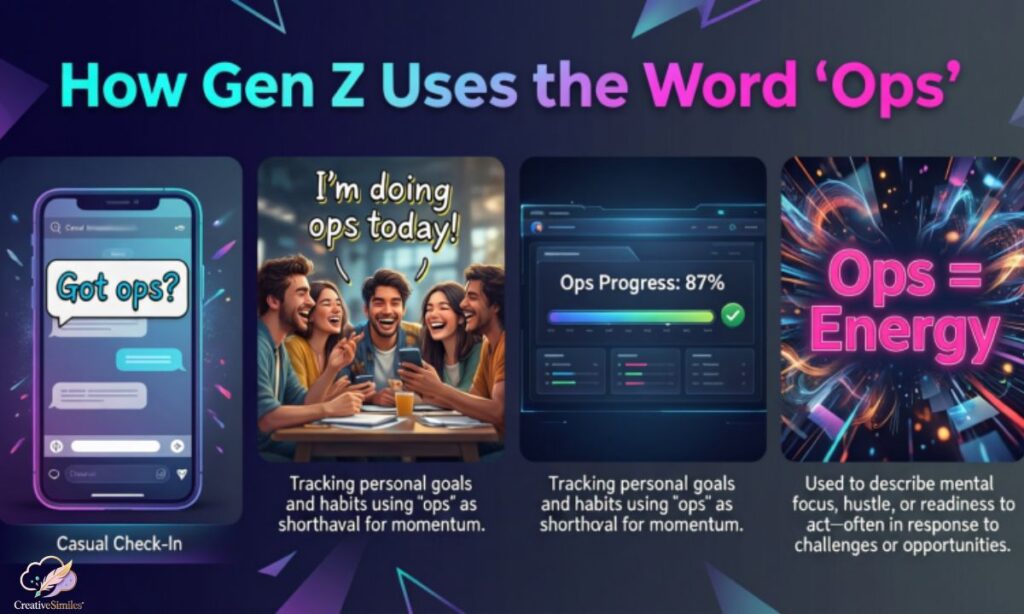
Gen Z has adopted ops meaning slang as everyday vocabulary for describing anyone they don’t trust or who creates negativity. The ops meaning Gen Z version is more casual and flexible than its street culture origins. They use ops slang in texts, captions, memes, and casual conversations both online and offline.
- Texting friends Ops meaning in text appears in group chats like “she’s become ops” or “avoid the ops at that party”
- Social media captions Ops meaning youth slang shows up in posts celebrating success while calling out haters indirectly
- Everyday conversation Ops slang casual use extends to joking about minor rivals, annoying classmates, or anyone causing small problems
Difference Between Ops and Haters
| Ops | Haters |
| Ops meaning slang refers to active opposition or enemies working against you | Haters simply dislike you or criticize from a distance without direct action |
| Ops meaning enemies includes people who take real steps to harm your reputation or success | Ops vs haters meaning shows haters mostly talk negatively but don’t actively plot |
| My ops meaning describes people you have direct conflict or rivalry with | Haters are often strangers or distant observers who just don’t like you |
| Ops slang implies a two-sided rivalry or ongoing beef | Haters are one-sided—they focus on you, but you might not even know them |
| Used in ops street slang and ops drill slang for serious threats | Haters are more casual—ops meaning online drama is lighter than real ops |
Words Similar to Ops in Slang
Understanding ops meaning slang becomes easier when you know similar terms used in ops slang culture. These words share the theme of describing enemies, rivals, or negative people in your life.
- Opps Alternative spelling of ops slang with the same meaning of opposition or enemies
- Haters People who dislike you without reason, though lighter than ops meaning rivalry
- Snakes Ops meaning fake friends who betray you or talk behind your back
- Plug Opposite of ops; someone who helps and supports you in ops slang usage context
- 12 or Feds In ops street slang, police are sometimes called ops by those in street culture
When and How to Use the Word Ops
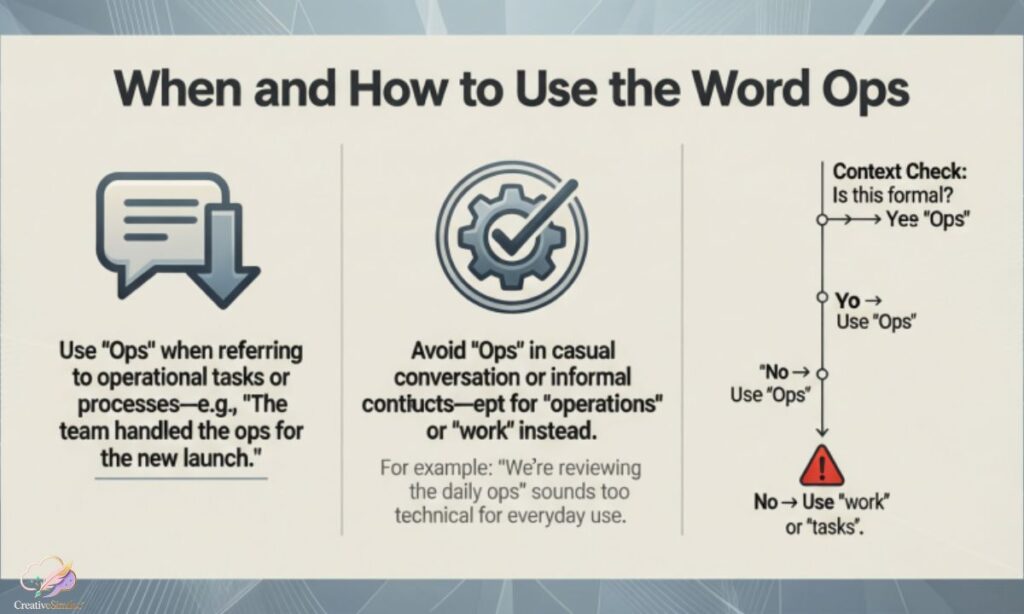
Knowing ops meaning slang is one thing, but using it correctly is another. The ops slang definition fits best when describing people who actively oppose you or create problems. Understanding ops slang explained helps you use the term naturally without sounding forced or inappropriate.
- Do: Use ops meaning in conversation casually with friends when talking about drama, rivals, or people who don’t support you
- Don’t: Overuse ops slang in professional settings or with people unfamiliar with modern internet slang
- Do: Apply ops meaning social slang in captions, memes, or texts where the playful or serious tone fits naturally
- Don’t: Use ops street slang to describe serious gang violence unless you’re part of that culture it can be disrespectful or misunderstood
Final Words
“Ops” is a simple slang word with a strong meaning. It talks about people who go against you or don’t support you.Today, “ops” is used in jokes, memes, and social media posts.
It often means haters, fake friends, or people watching your moves.In the end, “ops” is about confidence and awareness. You stay focused on yourself while the ops stay watching.
Frequently Asked Questions
What is ops meaning slang?
“Ops” means enemies, rivals, or haters. It’s a slang term for people who go against you or secretly watch you.
What does ops mean in slang on social media?
On social media, “ops” usually means fake friends or online haters. It’s often used in a funny or sarcastic way.
What does my ops mean in slang?
“My ops” refers to people who don’t support you or compete with you. It can be serious or playful, depending on the tone.
Where did ops slang come from?
Ops slang comes from the word “opposition.” It started in drill and hip-hop culture before spreading online.
What does ops mean on TikTok?
On TikTok, “ops” means haters, ex-friends, or people secretly watching your videos. It’s mostly used as a joke.
Is ops slang serious or funny?
It can be both. In music it sounds serious, but online it’s usually humorous and lighthearted.
What’s the difference between ops and haters?
“Ops” sounds more dramatic and slang-based. “Haters” is a softer, more general term.
Can I use ops in daily conversation?
Yes, you can use it casually with friends or online. Just keep the tone fun and avoid serious contexts.

Lucas Gray ICI, with 4 years of experience, is a creative writer specializing in articles. Skilled in fun, similes, meaning, and metaphors, he makes every piece engaging, memorable, and full of creative flair at CreativeSimiles.com.